How traveling rocks work
Creativity, care for the environment, and human connection fit into something small enough to hold. A traveling rock is your own rock, painted or unpainted, passed directly to another person. Its public passport connects real encounters without turning participation into a requirement.
Published by Traveling Rock ·
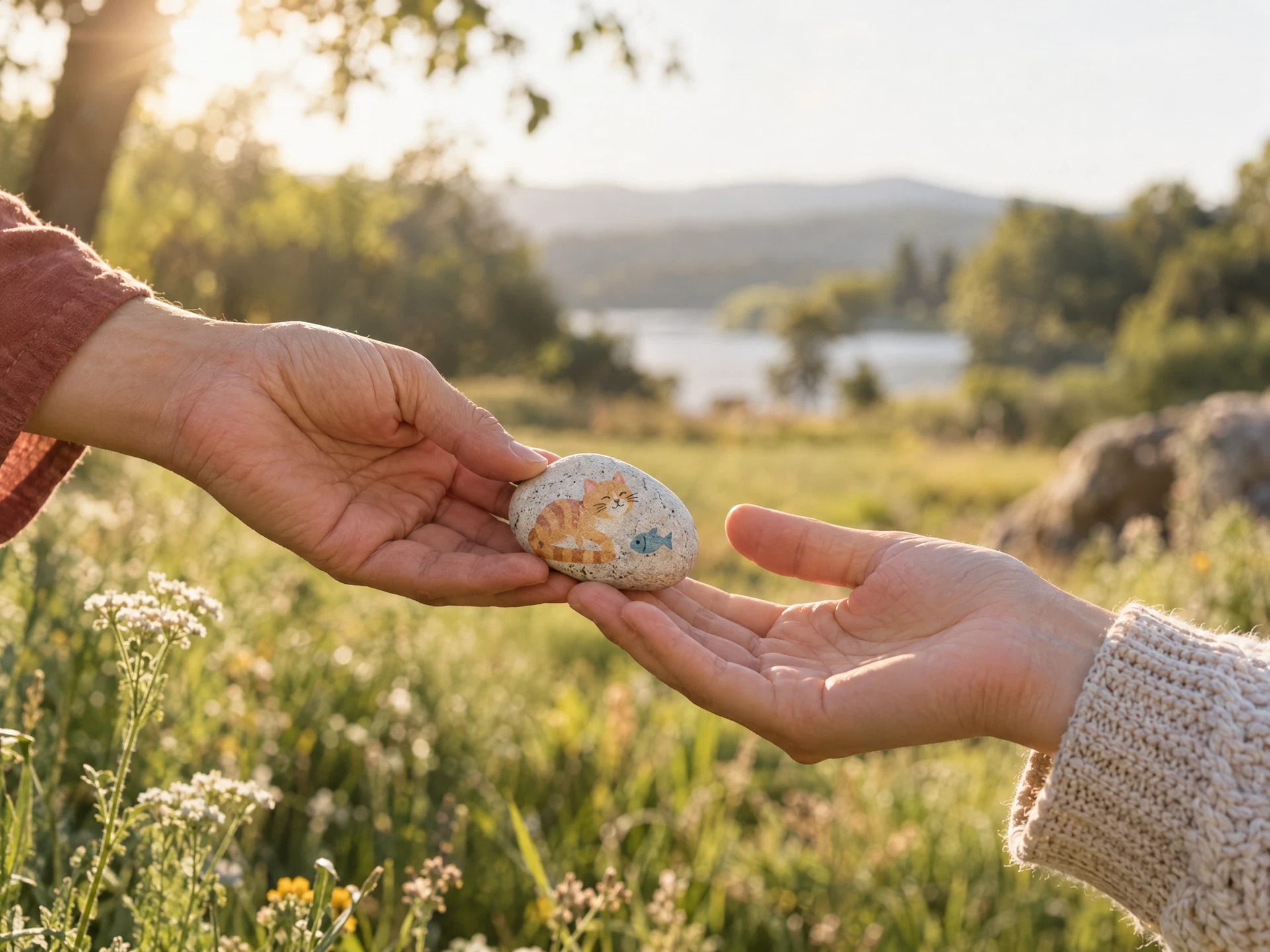
A journey starts with a conversation
The rock is a reason to meet someone, not an object to hide outdoors. Use your own materials or materials obtained with permission. Do not take stones from protected places, paint natural objects in place, or leave painted rocks in nature. Avoid glitter and loose decorations that can flake off.
Give the rock a passport
A creator gives it a name and an honest introduction. Creating a new passport uses the existing sign-in and verified-email flow. Keep private editing access separate from the public page.
Ask, then hand it over
Offer the rock directly to a willing person. Explain the invitation and give them the public passport link or QR code. A no is fine; nobody has to accept a rock.
Let the next person choose
They can read, keep the rock for now, add a real diary chapter, or pass it on later. Posting, photos, and shared locations are optional.
The passport remembers real encounters
A passport belongs to one rock. Its introduction and approved diary entries stay together on that public page, so you can follow the journey without piecing it together from separate posts. When adding a chapter, write in the rock's first-person voice, but report only an encounter or place that actually happened.
Diary photos and words appear publicly only after consent and moderation. Share a broad location only if you want to, and respect other people's permission. The public QR code opens the passport; it is not a password or a private editing link.
The separate community stories gallery is for approved rock art, places, and cleanup-change photos. It does not create duplicate diary pages or prove a rock has visited somewhere.
Care for a place, with or without a rock
A cleanup is an independent choice. You can log litter you actually collected without a rock, public story, photo, or shared location. A diary entry, a journey, or a community photograph does not add litter items to the shared total. Only a separate accepted cleanup report contributes; the totals are participant reports, not independent verification.
Use gloves or a litter picker, wear suitable footwear, and supervise children. Do not handle needles, sharp objects, or hazardous waste. Stay out of unsafe areas and notify the appropriate local service about dangerous items. Dispose of collected litter at an appropriate bin or collection point.